
Creating a Safe Outdoor Space for Your Golden
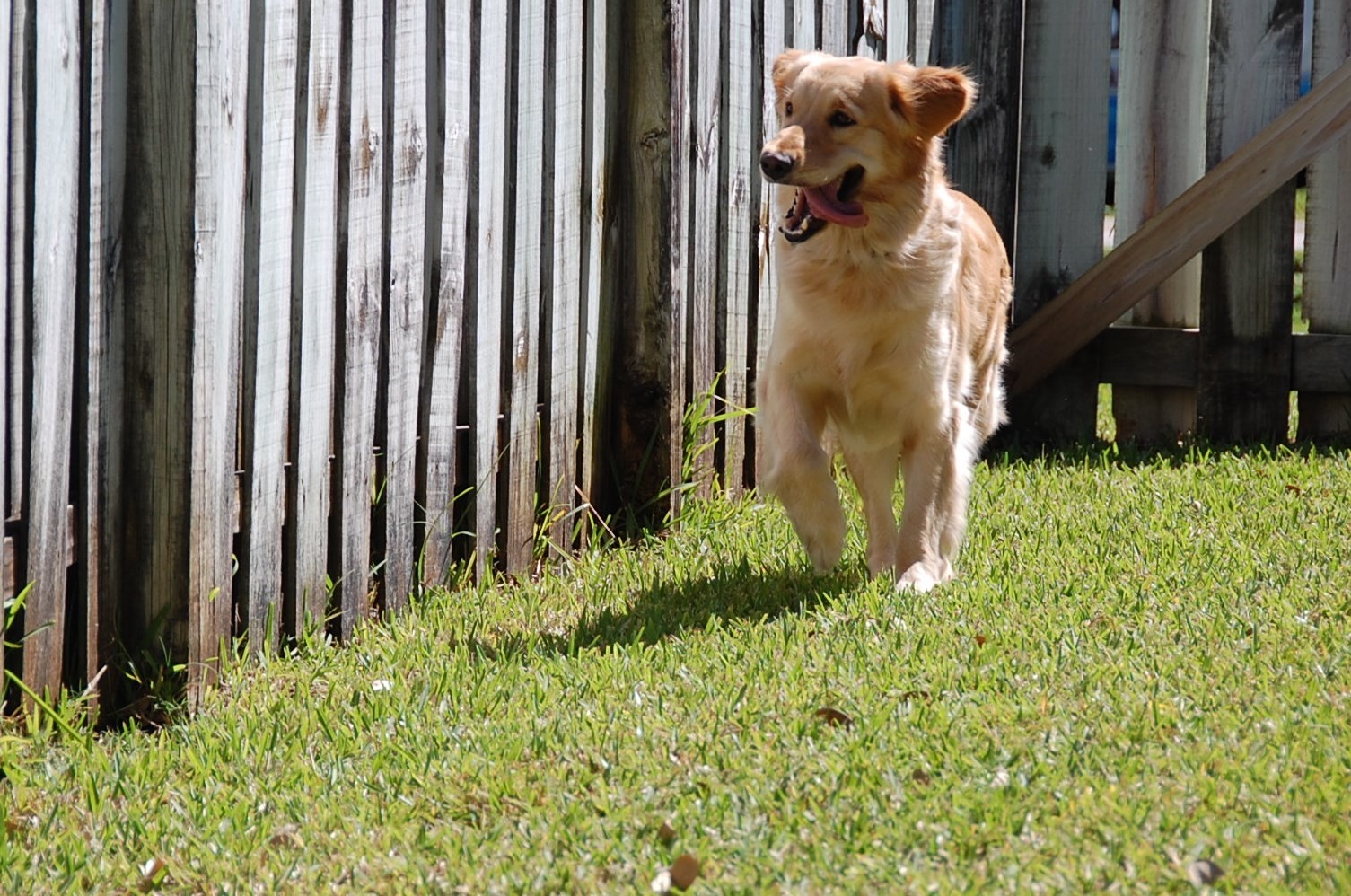
A securely fenced yard is one of the most important ways to keep your golden retriever safe. A fence gives your dog room to explore, play, and relax — while preventing escapes, accidents, and unwanted encounters with wildlife or neighborhood distractions.
For families with young children, a fenced yard also creates a safe, shared space where both dog and child can enjoy supervised outdoor time together. In fact, for homes with younger children, GRRMF requires a securely fenced yard for adoption.
Why a Fenced Yard Matters
Goldens are curious, social, and easily distracted — which makes a secure fence essential. Even the best‑trained dog can bolt after a squirrel, follow a scent trail, or wander off if a gate is left open. A fence protects your dog from traffic, wildlife, and the risk of becoming lost or injured.
A fenced yard also supports healthy routines: playtime, potty breaks, and mental stimulation. It gives your golden a safe place to burn energy, which helps reduce unwanted behaviors indoors.
Recommended fence types
GRRMF recommends sturdy, physical fences that provide both safety and visibility. Here are the options that work best for most families:
- Wood privacy fence (4–6 feet).
Offers excellent security and prevents visual triggers that may cause barking or fence‑running. - Vinyl fencing.
Durable, low‑maintenance, and similar in function to wood privacy fencing. - Chain‑link fencing (4 feet or higher).
A safe, affordable option that allows visibility while keeping your dog contained. - Metal or aluminum fencing.
Attractive and secure, as long as spacing between bars is narrow enough to prevent squeezing through.
▶ Read More: How to Adopt
Fence types to avoid
Some fencing options may seem convenient but do not provide the safety or reliability needed for a golden retriever.
- Invisible or underground electric fences.
These do not prevent other animals or people from entering your yard, and many goldens will push through the shock if excited or frightened. - Short decorative fences.
Goldens can easily jump over low barriers, especially when young or energetic. - Gaps under or between fence panels.
Even small openings can become escape routes for determined dogs.
Special considerations for chain‑link and picket‑style fences
- Neither blocks visual triggers. Increased visibility often leads to more barking, fence‑running, and reactive behavior.
- Your dog is visible to others. This increases the risk of theft or someone opening your gate while you’re not watching.
- Check the spacing between pickets or bars. If a golden can fit her head through, she can get stuck — and injure herself trying to pull free.
- Secure the gate hardware. Many dogs learn to open the common U‑shaped latches used on chain‑link gates. Choose sturdy latches and install a lock on the inside of the gate so it cannot be opened from the outside.
- Inspect for gaps or weak points. Look for loose posts, bent chain‑link sections, shifting soil, or gaps under the fence line that a determined dog could exploit.
Policy Clarifications
Urban and suburban homes must have a secure, on property fenced yard
A screened lanai, pool cage, or nearby fenced dog park — even one located within your complex — does not meet GRRMF’s fencing requirement.
Agricultural “wire and post” fencing requires special review
Single‑strand wire attached to posts every several feet is not secure enough for a large dog. Woven or tensile wire with small square openings — installed tightly with posts placed closer together — may be acceptable for an older dog. Additional photos may be needed to determine whether this type of fencing provides adequate safety.
Additional safety tips
- Inspect wood fences regularly. Look for loose slats, rotten boards, gaps, or holes a dog could push through.
- Secure gates with sturdy latches and an inside lock. This prevents anyone from opening the gate from the outside.
- Check the gap under the gate. Ensure it’s not large enough for a dog to shimmy underneath.
- Supervise outdoor time. Many dogs dig — and can dig under a fence surprisingly fast.
- Walk the perimeter. Look for erosion, loose posts, or shifting soil that could create escape points.
- Provide shade and water. Florida heat can be intense, and goldens overheat easily.
- Review backyard safety. You may also find our Backyard Safety page helpful for identifying hazards and creating a secure outdoor environment.
Our commitment to safe, happy homes
A secure fence is one of the best ways to protect your golden and give them the freedom to enjoy outdoor time safely. By creating a safe environment, you’re helping ensure a lifetime of happy memories for both your family and your dog.
Questions about fencing requirements?
If you have questions about fencing, yard safety, or adoption requirements, please email us at info@grrmf.org. We’re here to help you create the safest possible home for your future golden.