
Should You Own a Golden?
Golden Retrievers are wonderful, right? Well then, of course everyone should have one. Actually – no – they aren’t suitable for every family. It’s important to consider some key qualities of a golden before deciding to own one. For some people, these qualities are “features”. For others, they are “bugs”. Either way, it is vital that you examine your own lifestyle, needs and wants to see if a golden is right for you. And, conversely, you need to evaluate if you can meet the needs of a golden retriever. If you can, we can attest to the fact that owning a golden is one of the most rewarding experiences you will ever have! They are addicting and people seldom have just one in their lifetimes. Once you have a golden, you’re usually hooked for life.
Here are a few things to consider:
Size
Goldens are medium to large sized animals. The standard size for males range from 23 – 24 inches at the shoulder and weigh proportionally from 65-75 pounds. Females stand around 21.5 – 22.5 inches and weigh 55-65 pounds. They normally possess extremely active tails making clean sweeps of coffee and end tables. Quite simply they need room. Uncluttered houses are a must!
 Exercise
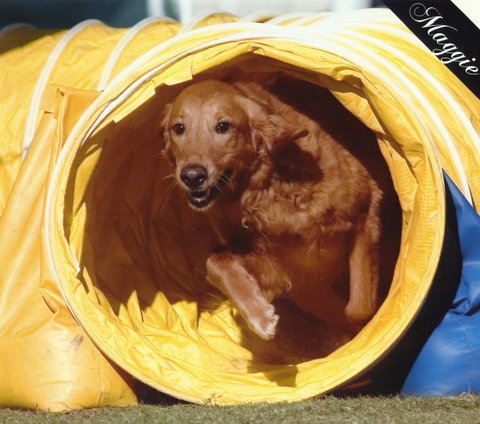
Goldens were developed as a sporting breed able to handle a day’s hunting routinely. They need to have hard consistent exercise daily (20-30 minutes twice a day is usually sufficient) or they may have difficulty adjusting to the “calm house pet” role expected by most owners. A fenced in yard is especially important in providing the dog enough exercise. Another option is a fenced dog park or walking trail. You must have a plan to give your golden enough exercise on a daily basis or both of you will be miserable. The younger the golden, the more exercise they generally need.
Velcro Dog
Goldens are faithful companions. They are usually always by your side, many will follow you from room to room. They will lie in the kitchen while you cook and at your feet while you watch TV. If you don’t want that much togetherness, a golden isn’t for you! They must be near their humans to be happy. Be prepared to do a lot of hands on petting with your golden – they love it. Some goldens are downright needy in their desire for attention from their humans.
Leashes
You may have visions of letting your dog play fetch in an open field or running free on the beach. As a sporting dog they are easily distracted by birds, animals or moving objects; they must be kept leashed when being exercised outside of a fenced yard to keep them from running off.
Shedding
In Florida, goldens shed moderately all year long. Brushing every other day is to your advantage. If you require a fastidiously kept house, a golden is not the dog for you unless you like to do a lot of cleaning. You will always have dog hair around, especially in rugs, on furniture, and OH YES, occasionally even in your food. With a golden in your house, hair becomes a condiment. Oh – and you will have to vacuum much more often than before – or little fur balls will accumulate along your baseboards! The good thing about golden retriever hair is that it does tend to clump in dust bunnies on the floor – it doesn’t have the sticky quality of many shorter haired breeds. Make sure you have a really good vacuum cleaner that you love using before bringing a golden into your home.
Health
Goldens are prone to allergies, skin problems, cancer and hypothyroidism and you may have to spend a fair amount on vet care over the life of a golden. Common inherited health issues are hip dysplasia, elbow dysplasia, various eye problems and heart disease. Expect your annual vet visit to run about $350 for basic care including an annual heartworm test. That is relatively cheap compared to if your dog has a health issue and requires veterinary care which today runs as much as human health care. Routine surgeries can run from $400 – $800, xrays $200, ultrasounds $400, bloodwork $75-250, etc. We’re not trying to scare you – but for any dog, you need to be prepared to provide veterinary care when your dog needs it. Setting aside a monthly amount for a future emergency is a must. There are also quality pet insurance programs available.
Care
Feeding one medium-sized dog for a year will run you about $50-$70 a month depending upon type of food and additional supplementation. Goldens must be fed a high quality premium food to prevent costly skin problems – which means you will not be able to buy your food at the grocery or discount store – and will have to make a special trip to the pet supply store. You’ll have to purchase monthly heartworm preventative, costing around $120 a year. If you do not give your dog heartworm preventative all 12 months of the year, it will probably contract the parasite and must be treated which costs about $1000; if your dog is not treated, it will die. Topical flea preventative medications, which are very effective, cost around $120 a year. There are other expenses such as toys, collars and leashes, brushes, shampoos and soft cozy beds. A well cared for dog, like its human counterpart, is happier with regular checkups and daily care.
Grooming
Goldens can be adequately groomed at home without expensive equipment. Grooming includes brushing, bathing, trimming hair from the pads of the feet, light trimming on ears, tails and back legs when necessary, and trimming nails. You won’t have to pay expensive grooming bills and we recommend against shaving goldens – it’s not good for them.
Neatness
Goldens are easily housebroken and make great housedogs. They tend to be messy drinkers, dripping water on the floor after they take their drink. They will beg for food so you’ll usually have some warm dog breath on you as you are eating your snack while watching a movie. You might even encounter a little slobber.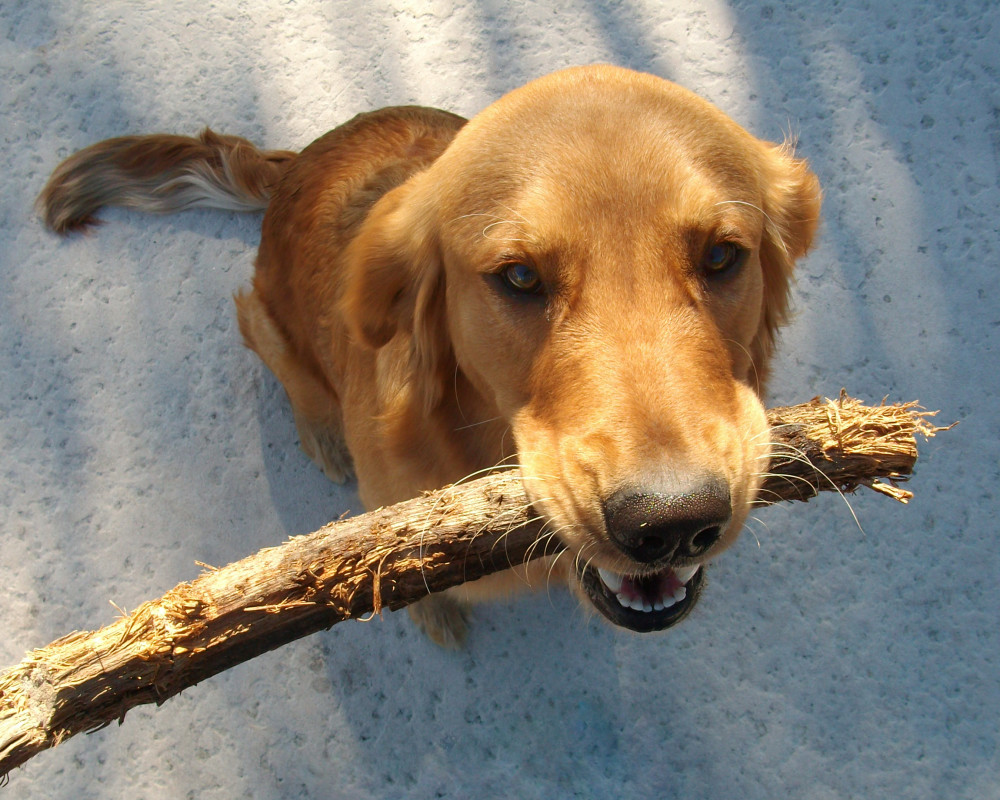
Training
Goldens are usually easy to potty train and make great house dogs. Many owners wish to make their goldens into good canine citizens. A good beginner’s obedience class can cost between $100-200 plus the cost of any special equipment. Moreover, goldens tend to be sensitive or soft in many training situations. They must be handled carefully with a loving, firm, but gentle approach. The end result is a well-mannered dog that is a joy to be around.
Small Children
People automatically assume goldens are the perfect dog for a family with children. Golden puppies quickly grow up to be rambunctious, strong bundles of energy that easily can play too rough with young children, especially when they are 6 months to two years of age. We don’t normally recommend goldens for families with children under the age of 7.
Guard Dogs
As protective guard dogs goldens are LOUSY!!! Though they may bark and growl defensively, when it comes down to brass tacks – they will gladly hold the flashlight for the burglar and give them a big kiss.
Outside Dogs
Goldens make poor outside dogs. Especially in Florida, they develop skin problems and flea allergies if kept outside. They frequently develop thunderstorm anxiety. As sporting dogs they are easily able to dig out of a fence or sometimes climb over it when left outside for long periods of unsupervised time because they want to be with people. They also are frequent targets for theft if left outside in a backyard when the owner is away from home. Goldens are very social and are pack oriented. They frequently develop behavior problems when they are kept separated from their families. A happy golden is an inside dog.
Male or Female?
Many people are fixated on getting a female golden, thinking that females are more laid back and affectionate than males. This is not true. Male goldens are blessed with loving personalities. Many people call them big teddy bears and even prefer male over female goldens.
Well, there you have it – the inside scoop on owning a golden. We’re not trying to scare you off – but rather just make you think carefully about bringing a beautiful fluffy golden retriever into your family so you both may live happily ever after.
More information on the Golden Retriever breed can be found on the Golden Retriever Club of America’s website at: www.grca.org.